
📮 An Uncomfortable Truth About Memory
Letters from a Seeker (Vol. 59)

📮 Letters from a Seeker
“Letters from a Seeker” is a weekly series of short contemplations that explore the mystery, meaning, and art of living. The word ‘Seeker’ in the title is inspired by the Delphic maxim: “Be a seeker of wisdom.” *** This series is exclusive to members.

Dear Fellow Traveler,
Watch how people explain themselves. Not in therapy or in confessional moments, but in ordinary conversation.
The offhand remark at dinner.
The way someone accounts for a habit, a fear, or a recurring difficulty.
Almost always, the explanation travels in the same direction: backward. Toward a parent, a classroom, a formative humiliation, an early loss. We are, most of us, fluent in our own origin stories—and we return to them with the regularity of someone checking a reference text. As though the past were a document. Fixed, authoritative, waiting to be correctly read.
The assumption is so embedded that it rarely gets examined.
The past happened a certain way. It left certain marks. Understanding those marks correctly is the key to being free of them. Get the story right, and the present will follow. It is a compelling assumption.
It is also, on closer inspection, not quite true.
Henri Bergson (1859–1941), the French philosopher who thought more carefully about time and memory than almost anyone before or since, made an observation that is simple to state and genuinely difficult to absorb: memory is not a recording. It is a reconstruction. Every time we remember something we are not retrieving a stored file.
We are rebuilding it—from fragments, from mood, from who we currently are, and from what we currently need the past to mean.
The memory changes in the remembering.
This is not a poetic metaphor.
Bergson was making a precise philosophical claim, one that neuroscience has since spent considerable effort confirming. The past as we experience it is not the past as it was. It is the past as it is being continuously assembled—shaped by the present moment, colored by intervening experience, revised by every retelling.
The childhood that made us cautious looks different at forty than it did at twenty-five. It will look different again at sixty. Not because the events changed. Because we did.
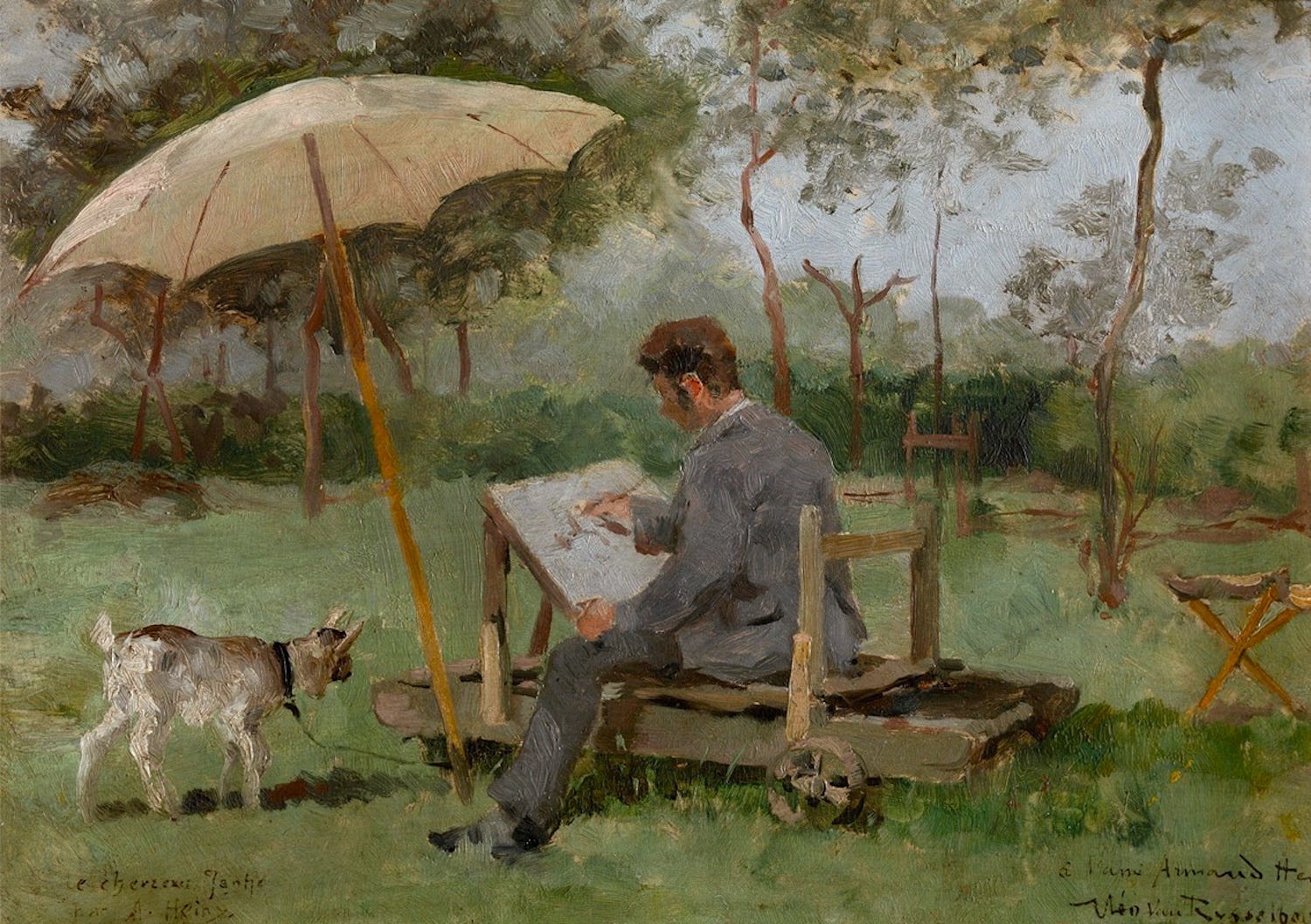
What we call memory is less like a photograph and more like a painting we keep returning to with a small brush.
The implications are uncomfortable if you sit with them honestly.
Because if memory is reconstruction rather than retrieval—if the past we carry is always partially a creation of the present self doing the carrying—then the project of reworking it, of getting it right, of finally understanding it correctly enough to be free of it, is built on a premise that doesn’t hold.
The psychotherapist Bruce Tift puts it with characteristic directness in his book Already Free: memories about the past are speculative, incomplete, and partial.
Consider sitting with those three words for a moment.
Speculative. Incomplete. Partial.
Not wrong, exactly. Not useless. But not the fixed document we treat them as. Our version of our childhood is probably different now than it was ten years ago—and will probably be different ten years from now.
The past you are trying to rework is not a stable object awaiting correct interpretation. It is a living narrative, continuously revised, that tells you considerably more about who you are now than who you were then.
This is where Tift becomes most useful—and most easily misread.
